
ADHD Overview

Attention-Deficit Hyperactivity Disorder is a neurodevelopmental disorder that affects approximately 5–7% of adults.
In adults, ADHD may become more noticeable during major life events such as:
- Starting post-secondary education
- Advancing in a career
- Changes in family dynamics, such as starting a family or experiencing a separation
- Menopause
- Retirement
These are some of the life events that may uncover previously unrecognized ADHD. It is important to note that ADHD is not an intellectual disability. A person can have ADHD and a high IQ while still experiencing significant challenges related to ADHD.
Although the underlying symptoms of ADHD are similar, their effects on everyday life can differ from person to person. Adults with ADHD may experience academic difficulties, occupational challenges, frequent job changes, relationship problems, financial difficulties, and substance use. ADHD is also commonly accompanied by a coexisting condition, such as anxiety or depression.
Other Ways ADHD May Appear in a Person’s Life
- Having difficulty focusing during conversations or feeling as though your mind is elsewhere
- Feeling that you are not working to your full potential or are underachieving
- Working significantly harder than your peers to achieve similar results
- Feeling frustrated or impatient, or experiencing emotional outbursts
- Having difficulty finishing an article or book
- Being easily distracted by sights and sounds in the surrounding environment
- Overestimating or underestimating the time required to complete tasks
- Hyperfocusing on a task while ignoring your surroundings
- Procrastinating or delaying the start of important tasks
- Engaging in impulsive spending, eating, drinking, or sexual activity
- Experiencing frequent driving accidents or receiving traffic tickets
- Having difficulty with organization
- Being forgetful during daily activities
- Frequently losing or misplacing items such as keys, a wallet, or glasses
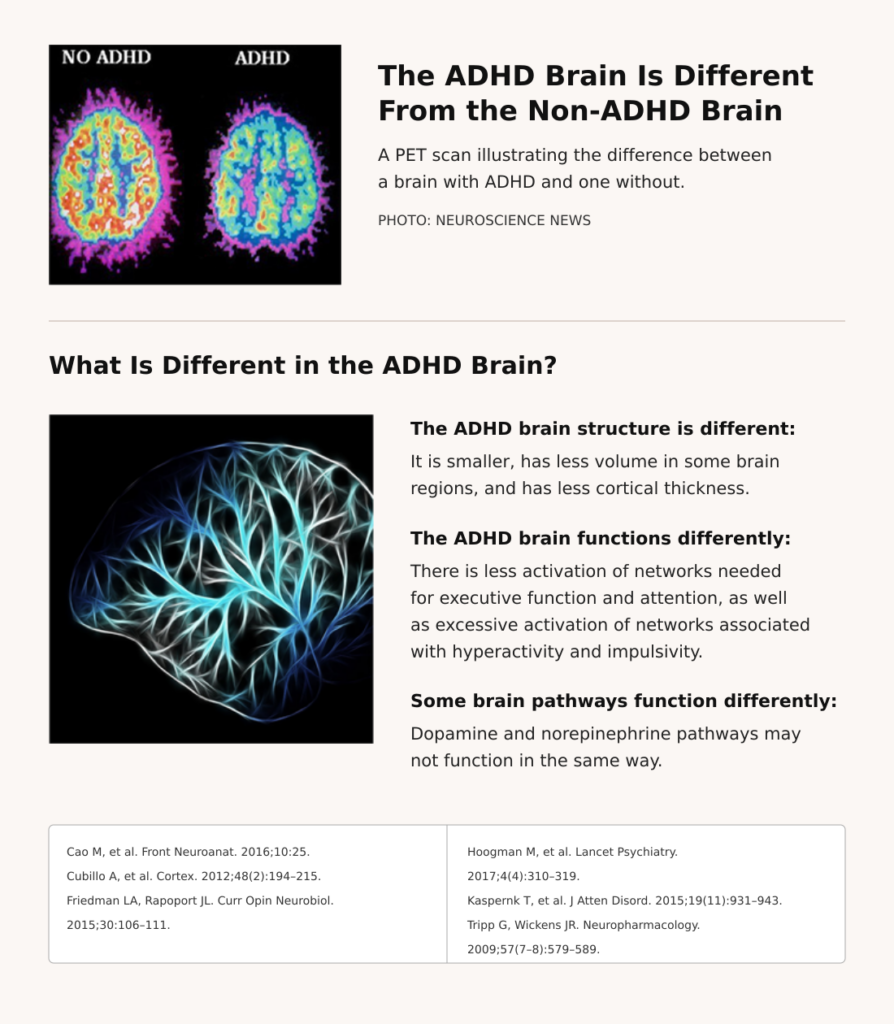
ADHD is highly heritable. If one family member has ADHD, it is more likely that another family member may also have ADHD. Although the exact cause of ADHD remains unknown, research has identified differences in the brains of people with ADHD compared with those without ADHD.
The Adult ADHD Self-Report Scale (ASRS-v1.1)
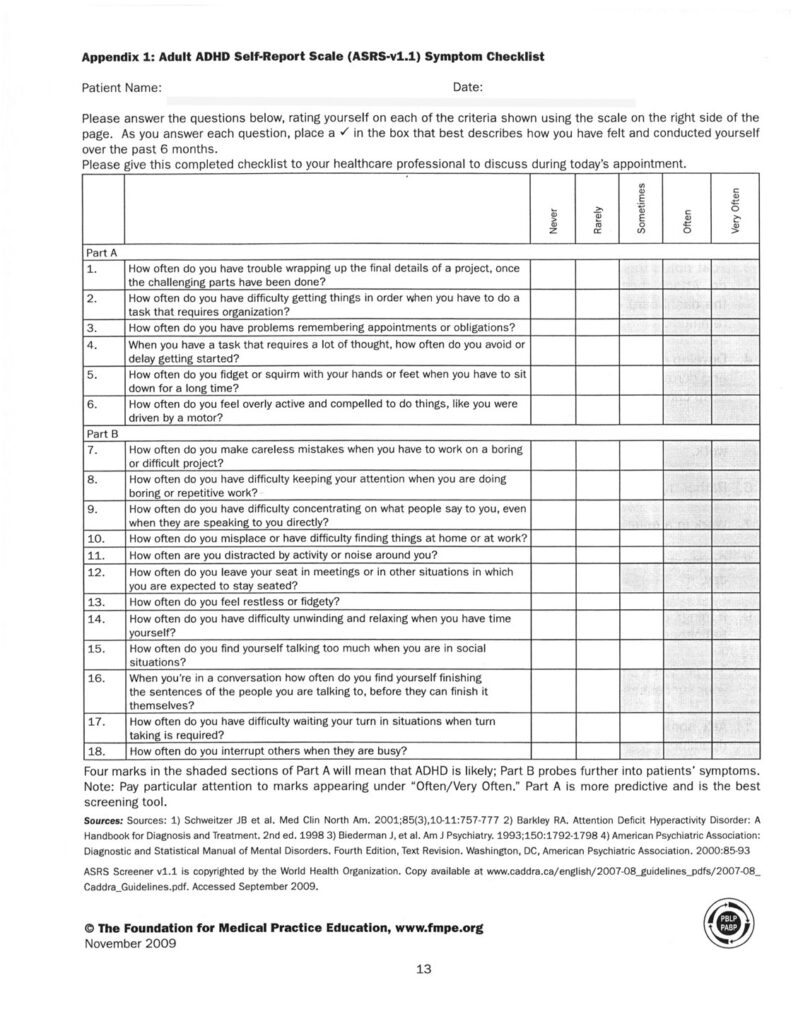
The Adult ADHD Self-Report Scale Symptom Checklist is a tool healthcare providers may use to screen adults for possible ADHD symptoms. It is a screening tool, not a diagnostic assessment, but it may help indicate whether a more detailed assessment is appropriate.
Although our Centre does not use this particular screening tool, you may download a free copy of the Adult ADHD Self-Report Scale below.