

June 2026 Neurodiversity Newsletter Issue #9
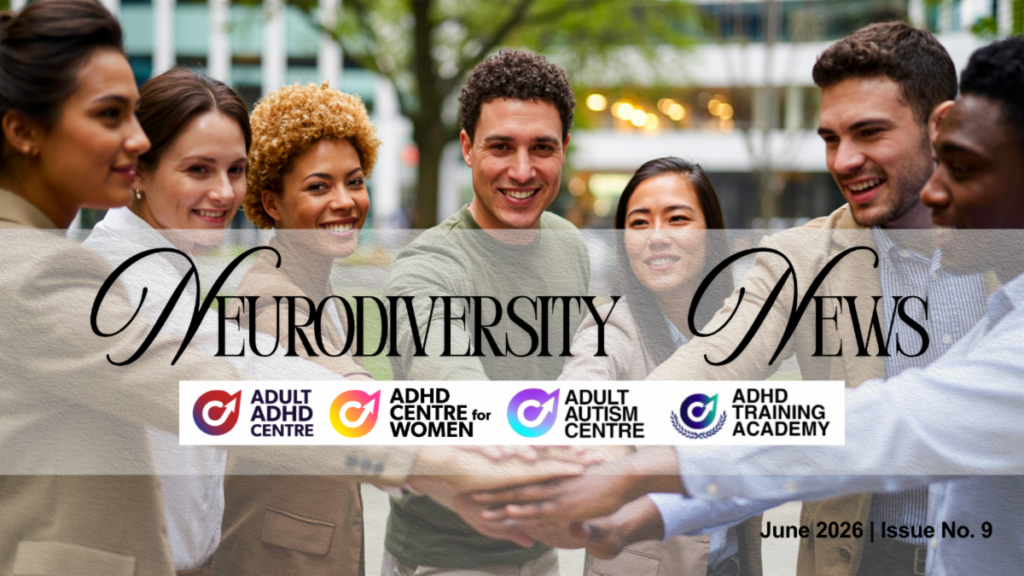
The June 2026 Neurodiversity Newsletter (Issue No. 9) explores understanding, acceptance, and meaningful support for neurodivergent individuals. This issue brings together practical ADHD strategies, mental health education, assessment information, community resources, and learning opportunities from across our organizations.
Please click this button to find the PDF of the latest issue.
Welcome and Overall Focus
This edition emphasizes understanding, acceptance, and individualized support within the neurodiverse community. Readers are invited to explore practical tools, educational resources, and professional services designed to strengthen wellbeing and help people feel supported throughout different stages of their journey.
“Body Doubling and ADHD: Why Working Beside Someone Can Help”
The research spotlight explores body doubling, an ADHD support strategy in which another person works nearby, either in person or virtually, to provide structure, presence, and accountability.
The article offers practical ways to try body doubling, including choosing one clear task, setting a short time limit, reducing distractions, using quiet presence, and reflecting on what helped. It also explains how this strategy may support focus and task initiation as routines change during the summer.
Featured Article: “Shattered”
In “Shattered,” Andrea Dasilva, Registered Clinical Counsellor, explores how distressing experiences can affect the nervous system, emotions, memory, relationships, and everyday functioning.
The article explains different responses to trauma and emphasizes that recovery is possible. It also discusses how professional support and evidence-informed approaches can help individuals process difficult experiences, rebuild connection, and move forward.
Take the 2-Minute Quiz
Readers are invited to complete a brief reflective quiz exploring the types of support that may help them feel their best during the season.
The quiz is intended for reflection and is not a diagnostic tool.
Assessments, Programs, and Support Resources
The June issue highlights several pathways for individuals seeking assessment, education, and ongoing support.
The Adult ADHD Centre shares information about inclusive care and comprehensive adult ADHD assessments. The B.E.S.T. Membership Program introduces practical, skills-based support for adults with ADHD, while the ADHD Training Academy offers professional training for people working in healthcare, education, counselling, coaching, human resources, and community services.
The Adult Autism Centre outlines the path toward an adult autism assessment and offers a free 30-minute consultation for individuals seeking guidance about their next steps. The Disability Team also provides information about Disability Tax Credit eligibility and how eligibility is based on the functional impact of an impairment rather than diagnosis alone.
Adult Autism Webinar
The newsletter features the June 2026 Adult Autism Webinar with Dr. Gurdeep Parhar, Andrea Dasilva, and Dr. Anita Parhar.
The session focuses on adult autism, sensory experiences, self-care, and support, giving participants an opportunity to learn from experienced professionals and deepen their understanding of autism in adulthood.
Upcoming Events and Learning Opportunities
The June issue includes upcoming educational events focused on ADHD, physical health, the Disability Tax Credit, and the Registered Disability Savings Plan.
These sessions are designed to help individuals and families better understand available resources, financial supports, and practical strategies for managing everyday challenges.
Resource of the Month
The featured book is The Trauma of Money by Chantel Chapman, a resource exploring the connections between money, healing, financial trauma, and financial shame.
Team Recognition and Staying Connected
The newsletter concludes by recognizing the team members and contributing writer who helped bring the issue together.
Readers are encouraged to stay connected with the Adult ADHD Centre and its partner organizations for future articles, assessments, programs, events, and neurodiversity resources.